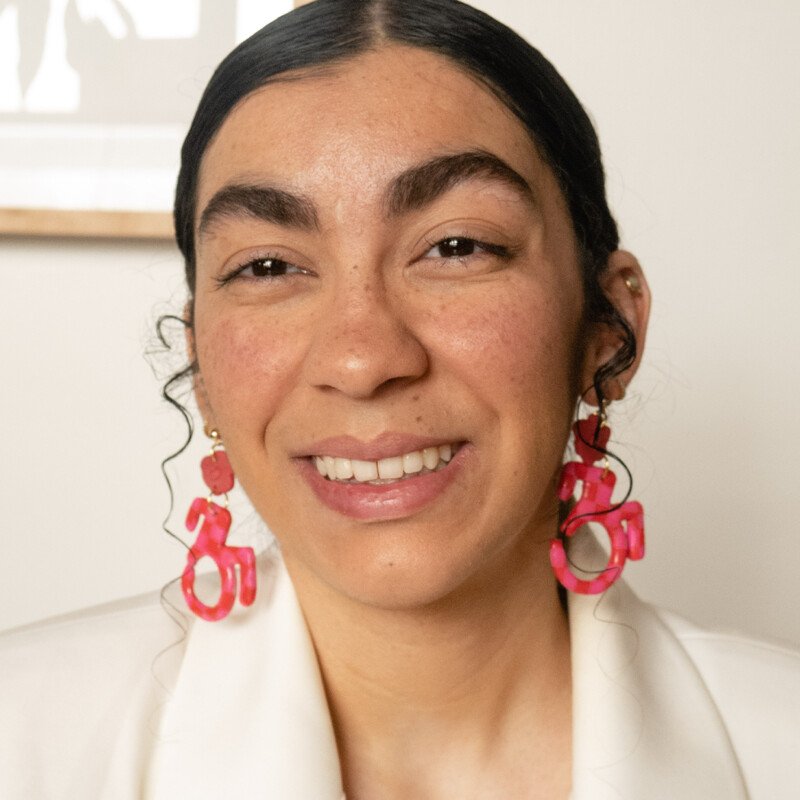
Forced Smiles
Church has always been a part of my life. When I developed my disability at around 14 years old, I had to navigate the fact that I couldn’t be as physically engaged in my faith as everyone else. I was told a foundation of religion is to go to church every week: “You need to fill your cup.” However, due to my severe disability, “going to church” started to look more like connecting with others, navigating their faith, rather than worshiping in the same physical space every Sunday. Even when I did attend, I could rarely enter the posture of prayer on my knees like others, and honestly, many small things like this made me feel like a terrible Christian.
During my college years, I began to explore what makes attending church so difficult for me. For one thing, the buildings are almost always inaccessible. I remember attending a church where I needed assistance to climb about 40 steps regularly. There was no alternative space for me to stay if I wanted to meaningfully participate outside the sanctuary. I didn’t understand how everyone was okay with seeing me struggle to climb every time, and I wondered if that’s what church surmounted to for those of us with disabilities.
Eventually, I stopped attending church. I had nearly identical struggles at every place I attended –stairs, tiny bathrooms, no grab bars, prayers for healing, and forced smiles. No one would change their small group locations or help me navigate the pebbled sidewalks in front of their entrances. They all would say the same thing, “I’m sorry we can’t help you,” or my favorite response, “We can help you climb the stairs.”
Only last year did I find a glimpse of what church could be. My husband and I met Bishop Sandy – an incredibly intelligent and diligent priest who sat with me at my literal worst. When I was having a personal crisis, she anointed me and accepted me as I was. She and her family took us in like we were their own. The congregation, led by Bishop Sandy, encouraged feedback, which led to more inclusive worship, such as changing the liturgical language of “please rise” to “please stand if you are able.” Even this simple change in language was meaningful. Despite a lack of accessibility in many spaces of our church, this warmth from their willingness to accommodate went much farther than meeting my access needs. If only the Church had a truly inclusive culture of “come as you are,” maybe we could create spiritual spaces for the non-disabled and the disabled to commune together.
Key Takeaways:
Apologizing to people with disabilities about inaccessibility puts pressure on them to accept apologies again and again without meaningful change.
Simple modifications such as changing the words in worship can make an impact.
Some people cannot make it to a service every week for a variety of reasons.
Consider how to make community gatherings more accessible - such as having one small group meet at a space without stairs or other barriers.
Dedicate resources to getting rid of physical barriers when possible.